Fallkhar’s Runes: A Practical Guide to Symbolic Thinking in Modern Life
In recent years, a quiet shift has been taking place across creative studios, home offices, and even corporate strategy rooms. People are reaching beyond spreadsheets and data dashboards toward older, more intuitive tools for clarity. Among these tools, Fallkhar’s Runes have begun to surface in conversations about decision-making, creative blocks, and personal reflection. But what exactly are they, and why are they gaining attention among professionals, creators, and entrepreneurs who typically pride themselves on rational approaches?
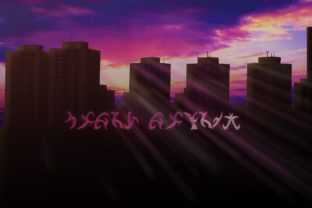
Fallkhar’s Runes are not ancient artifacts in the traditional sense. They are a curated set of symbolic glyphs, each representing a core human concept—such as change, resilience, silence, growth, or tension. The system was developed to help people externalize internal questions, break habitual thinking patterns, and access fresh perspectives without the noise of algorithms or advice. Unlike many modern self-help frameworks that rely on step-by-step formulas, Fallkhar’s Runes lean into ambiguity and personal interpretation. This is precisely why they are resonating in an era saturated with endless information.
Why Fallkhar’s Runes Fit the Current Moment
The resurgence of interest in symbolic tools like Fallkhar’s Runes is not accidental. It aligns with broad cultural and professional trends that value depth over speed, meaning over efficiency, and intuition over pure logic. The past decade has seen a rising skepticism toward one-size-fits-all productivity systems and a growing appetite for practices that honor individual context. People are tired of prescriptive advice that ignores nuance. Fallkhar’s Runes offer the opposite—a structured ambiguity that forces the user to engage actively.
In particular, three modern shifts have opened the door for such tools. First, the burnout epidemic among knowledge workers has led many to seek slower, more reflective methods for making decisions. Second, the rise of remote and hybrid work has blurred the line between professional and personal lives, prompting professionals to look for practices that address both domains. Third, there is a broader cultural move toward what some call “ancient modernism”—taking elements of older wisdom traditions and adapting them for contemporary contexts without the baggage of dogma. Fallkhar’s Runes fit squarely into that space.
For marketers and content creators, the runes provide a way to escape the echo chambers of trend-driven content. For educators and freelancers, they offer a low-cost, high-signal method for generating discussion or breaking a creative stalemate. Even business owners have started incorporating rune pulls at the beginning of strategic meetings, not as a substitute for analysis, but as a way to surface assumptions and invite diverse viewpoints before diving into budgets and timelines.
The Evolution of Symbolic Tools in a Digital World
Symbols have always been part of human cognition—from cave paintings to corporate logos. But in the twentieth century, the West largely relegated symbolic thinking to art and religion, while business and science prized literal, quantifiable communication. Fallkhar’s Runes represent a rebalancing. They are not meant to replace data or logical reasoning. Rather, they act as a complement—a way to check the blind spots that pure logic often misses.
What makes Fallkhar’s Runes distinct from older rune systems, such as the Elder Futhark, is their deliberate simplicity. There are no complex cosmological correspondences or historical claims that require scholarly study. The meaning of each rune emerges from its name and shape, and the user’s own life context supplies the richness. This evolutionary step makes the system accessible to anyone, regardless of background or belief. A busy entrepreneur can pull a rune in thirty seconds and spend three minutes journaling about what it stirs up. A blogger might use a rune as a thematic prompt for a post, allowing the symbol to guide tone and structure.
Meanwhile, the social dynamics of sharing rune insights have evolved too. Online communities have sprung up around Fallkhar’s Runes, where users post daily pulls, compare interpretations, and discuss how a given symbol played out in actual events. This crowdsourced layer adds depth without authoritative dogma—users agree that no single interpretation is “correct,” but the conversation enriches everyone involved. It mirrors how professionals exchange case studies and lessons learned, but with a poetic license that keeps the exchange human.
Practical Applications for Professionals and Creators
The most common objection to tools like Fallkhar’s Runes is that they are too vague or spiritual for serious work. But that objection often comes from a misunderstanding of how they function in practice. A rune is not a fortune-telling device; it is a lens. When a project feels stuck, pulling a rune such as “The Knot” can reframe the problem not as a failure but as a phase requiring patience and regrouping. That reframing is psychologically potent—it changes emotional valence without requiring external validation.
For example, consider a freelance designer who has been struggling with client feedback loops. Drawing “The Mirror” rune might prompt them to ask: “What am I projecting onto this situation? Is the client’s pushback actually about me, or is it about their own uncertainty?” This self-inquiry, guided by a simple symbol, can cut through hours of overthinking. Similarly, an entrepreneur deciding between two growth strategies might pull “The Bridge.” Rather than waiting for a spreadsheet to provide a definitive answer, they use the rune to focus on connecting resources and bridging gaps—an actionable insight that shapes their next move.
Educational settings also benefit. A teacher introducing a complex topic might use a rune as a warm-up activity: students silently reflect on what the rune means to them before the lesson begins. This primes their brains for lateral thinking and personal relevance. In content marketing, using a rune as a weekly theme for newsletter topics creates narrative continuity and encourages subscribers to engage with the content on a deeper level. The rune acts as a shared mental anchor across posts, videos, or emails.
How to Integrate Fallkhar’s Runes Into Your Workflow
Getting started does not require buying anything. The simplest approach is to create a set of cards or a digital image collection of the runes. Some practitioners draw one rune each morning and spend five minutes writing a response. Others use them as a check-in during midday slumps. A common pattern among busy professionals is to pull a rune at the start of a weekly planning session, using its theme to set an intention rather than a rigid goal. For instance, if “The Current” appears, the week might be about going with momentum rather than forcing progress against resistance.
Teams can also adopt a collective practice. Before a brainstorming session, each person pulls a rune and shares a one-sentence takeaway. This quickly surfaces hidden assumptions and gives quieter team members a structured way to contribute. Over time, the group develops a shared vocabulary for talking about challenges without resorting to jargon or blame. “We’re in a Tower phase” becomes shorthand for a period of necessary deconstruction, which reduces anxiety and aligns energy.
It is important, however, to maintain realistic expectations. Fallkhar’s Runes are not a magic solution. They are a tool for perspective, not a replacement for hard work, market research, or client feedback. Used judiciously, they sharpen intuition and create moments of clarity. Overused or fetishized, they can become a crutch. The key is integration: let the rune inform your thinking, but always follow up with concrete action.
Why People Are Paying More Attention
Part of the rising interest in Fallkhar’s Runes stems from a broader cultural fatigue with social media echo chambers and algorithmic curation. People crave signals that are not optimized for engagement but for reflection. The runes offer that rarity: a non-commercial, physically or digitally tactile experience that prompts original thought rather than reactive consumption. In a landscape where every app competes for your attention, a simple symbol that asks you to sit still for sixty seconds feels almost revolutionary.
Additionally, the DIY nature of the practice appeals to the modern maker and creator ethos. You can hand-draw your rune set, design a digital version, or print a deck from a free template. There is no subscription, no data collection, no content feed. That autonomy is refreshing for professionals who spend their days navigating platforms and policies. It returns a sense of agency over one’s mental environment.
Observations and Recommendations for New Practitioners
If you are curious about trying Fallkhar’s Runes, resist the urge to search for “official meanings” online. The power of the system lies in your own interpretation. A rune like “The Mirror” might mean self-reflection to one person and confrontation to another. Both are valid because the relevant meaning is the one that surfaces in your specific context. Write down your initial impression, then revisit it after the event or decision passes. Over time, you will build a personal lexicon that feels increasingly reliable.
For creators and entrepreneurs specifically, the runes can become part of a weekly reflection habit. Pair them with a short journal entry or a voice memo. Track patterns: after a month, look back at which runes appeared during high-stakes weeks versus low-key periods. This meta-practice can reveal recurring themes—like how often “The Threshold” appears before a major launch, or how “The Weave” shows up when collaboration is key. That insight is actionable because it helps you anticipate challenges before they arise.
Fallkhar’s Runes are not for everyone, and that is fine. But for those who feel that their decision-making has become too rigid, too reactive, or too disconnected from deeper purpose, these simple symbols offer a practical, low-stakes way to reintroduce reflection into daily workflow. In an age that prizes speed, they remind us that sometimes the best next step begins with a pause.